- - - -

希瑟·詹姆斯·杰克逊位于怀俄明州杰克逊霍尔的野生美景中,以国家公园为背景,十多年来为西部山脉带来了最高水平的艺术品和服务。

希瑟·詹姆斯(Heather James)迎合独特的社区,使杰克逊霍尔成为美国文化和户外无与伦比的目的地,致力于为当地人和游客提供无与伦比的艺术品和白手套服务。

172中心街,套房101
邮政信箱3580
杰克逊霍尔, WY 83001
(307) 200-6090

开放时间2025 年 12 月 1 日至 2026 年 3 月 28 日
星期二至星期六 上午 10 时至下午 5 时

展览
土地的遗产乔治亚-奥基夫和艾米莉-卡梅-金瓦瑞耶
档案

土地的遗产乔治亚-奥基夫和艾米莉-卡梅-金瓦瑞耶

2024 年 7 月 10 日至 2025 年 1 月 31 日
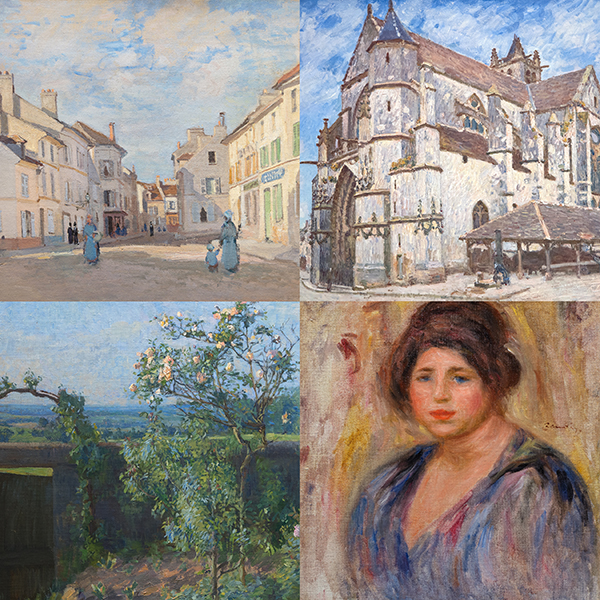
印象派在Heather James Fine Art
档案

印象派在Heather James Fine Art

2022年9月1日至10月31日
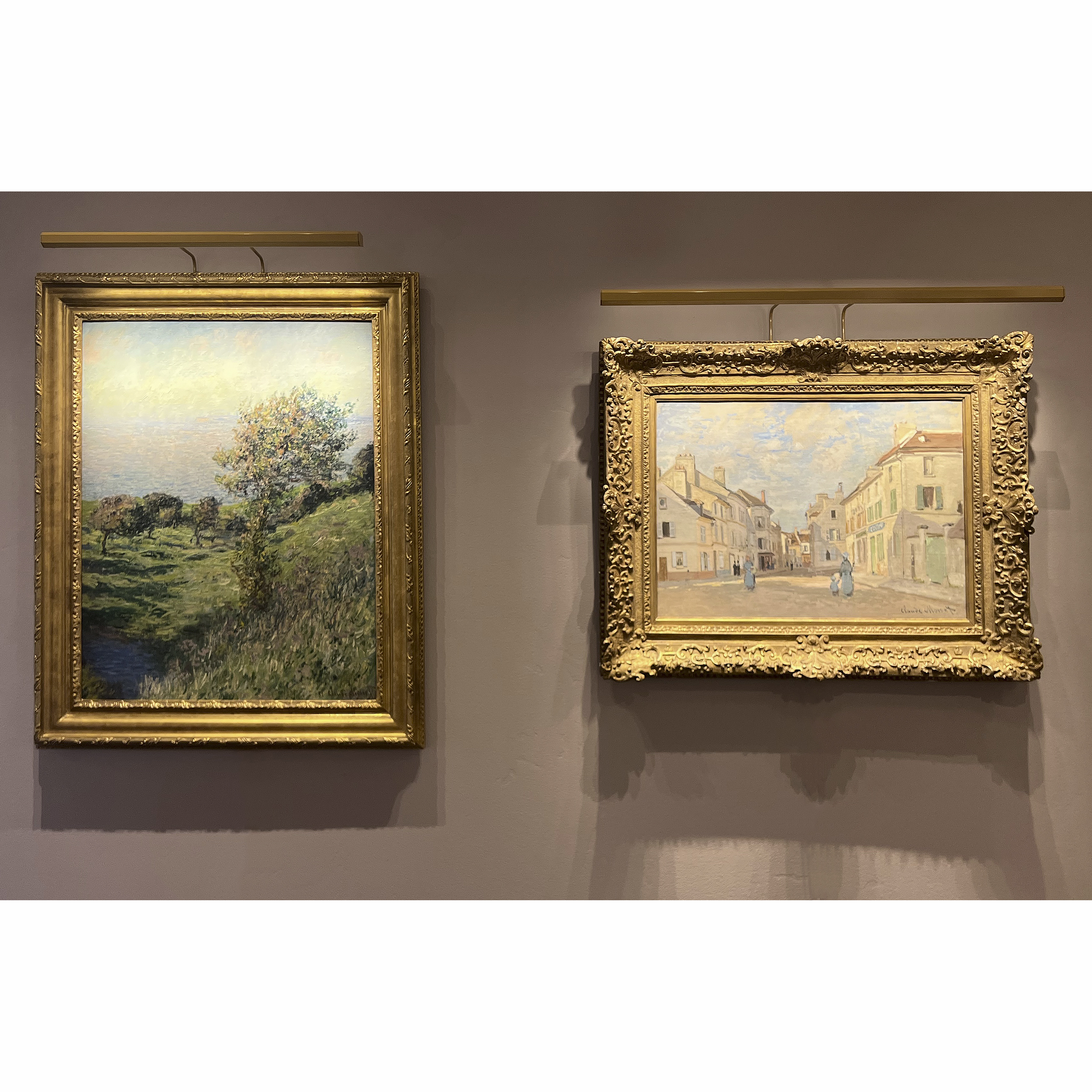
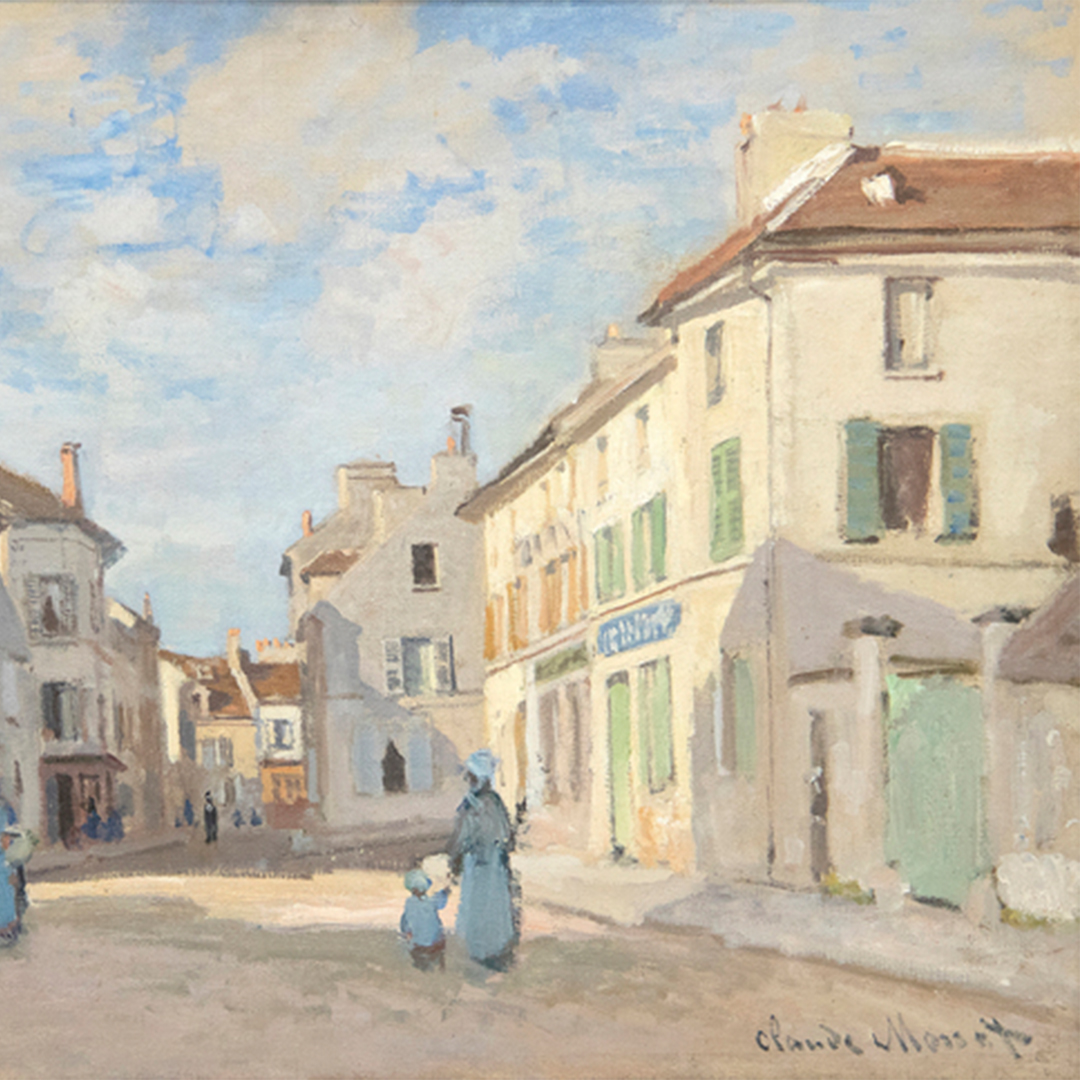
克劳德-莫奈:一个印象派的天才
档案

克劳德-莫奈:一个印象派的天才

2022年8月18日至10月31日
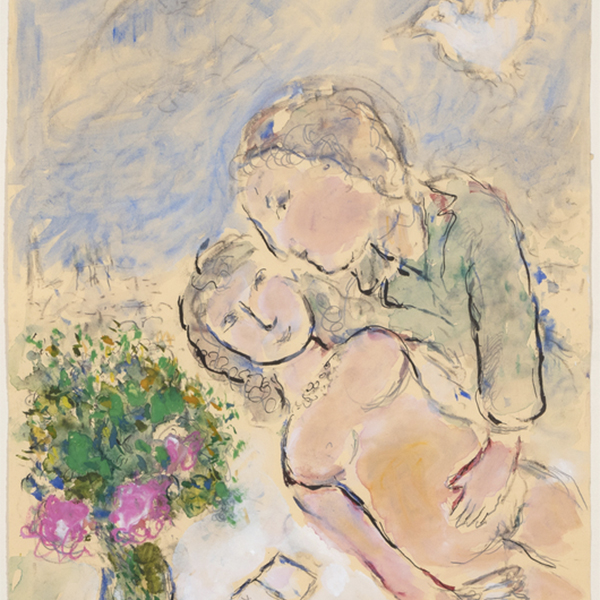
马克-夏加尔:爱的颜色
档案

马克-夏加尔:爱的颜色

2022年9月8日至10月12日
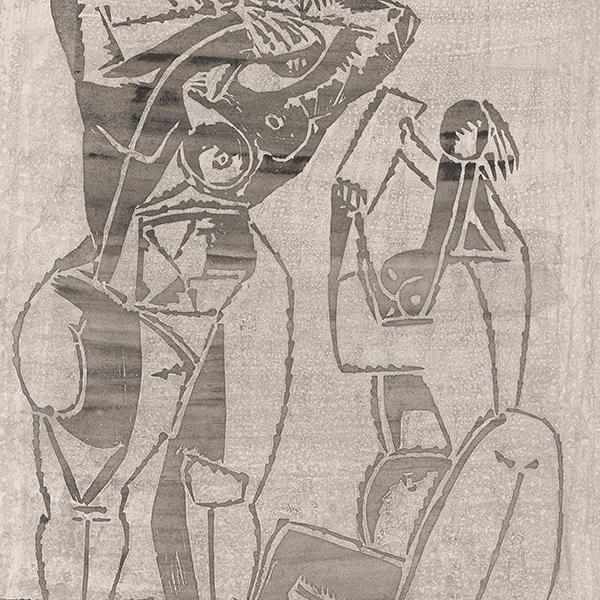
毕加索 - 版画和纸上作品
档案

毕加索 - 版画和纸上作品

2022年9月1日至10月12日
温斯顿·丘吉尔爵士的画作
档案

温斯顿·丘吉尔爵士的画作

2018年8月1日至9月16日
诺曼·罗克韦尔:艺术家在工作
档案

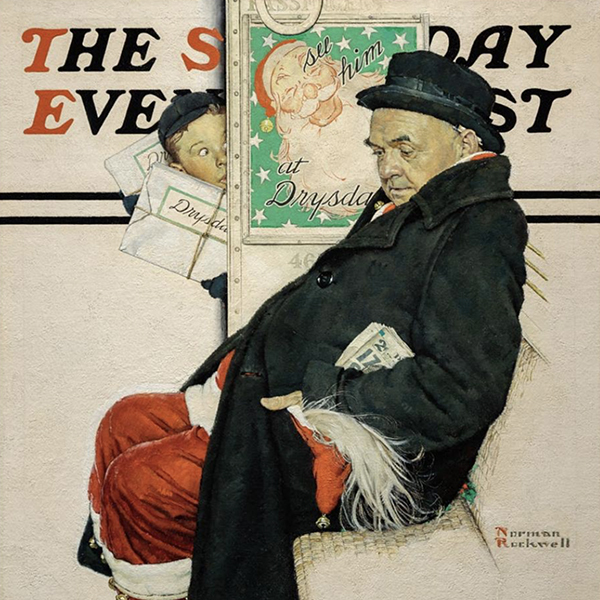
诺曼·罗克韦尔:艺术家在工作

2016年6月30日至9月30日

图稿

安德鲁怀斯 - 星路 - 纸上的水彩 - 21 1/4 x 29 in.

安德鲁·怀斯

理查德-塞拉--布列塔尼角水平反转第 16 号--石版画-蜡笔画,两张手工纸--19 3/4 x 55 7/8 英寸。

理查德·塞拉

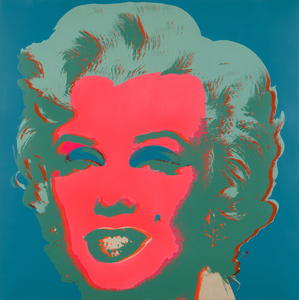
<div><font face=Lato size=3>Andy Warhol’s "Marilyn #30" (1967) is part of the artist’s landmark Marilyn portfolio, one of his most celebrated and sought-after series. From an edition of 250 (this work numbered 138/250, with 26 artist’s proofs), the portfolio is represented in major institutions including the Museum of Modern Art, New York. </font></div><br><br><div><font face=Lato size=3> </font></div><br><br><div><font face=Lato size=3>Based on a publicity still from the 1953 film Niagara, Warhol’s Marilyns epitomize his fascination with celebrity, mass media, and the power of the reproduced image. Each print in the series was created with five screens—one carrying the photographic likeness and four for areas of color—deliberately layered with bold hues that are at times slightly off-register. This misalignment heightens the tension between glamour and artifice, echoing the fragile brilliance of Marilyn Monroe’s own persona. </font></div><br><br><div><font face=Lato size=3> </font></div><br><br><div><font face=Lato size=3>As one of Warhol’s defining bodies of work, the "Marilyn" prints remain icons of Pop Art, merging Hollywood stardom with silkscreen’s mechanical repetition to create a timeless meditation on fame, desire, and image. </font></div>

安迪·沃霍尔

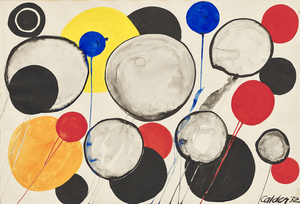
亚历山大-考尔德的作品《Rouge Mouille》(湿红)以红色圆圈为背景,一些圆圈像爆炸一样散开,营造出一种活力四射的膨胀感,另一些圆圈则向下延伸,犹如烟花表演的流线型轨迹。这个动画背景上点缀着许多不透明的圆球,以黑色为主,但也穿插着醒目的蓝色、红色和微妙的黄色球体。五颜六色的球体与爆炸性的红色相映成趣,捕捉到了焰火表演的震撼和壮观,将这幅画转化为这一令人眼花缭乱的庆祝活动的视觉隐喻。这幅艺术作品充满了兴奋和活力,以静态的媒介概括了烟花的短暂之美。

亚历山大·卡尔德

亚历山大-考尔德(Alexander Calder)的水粉画作品 "Wigwam rouge et jaune "是对设计和色彩的生动探索。这幅画的构图以对角线格为主,对角线在顶点附近相交,呈现出一种动态平衡。考尔德用红色和黄色的菱形引入了奇思妙想的元素,为作品注入了童趣,营造出节日的气氛。右倾线条顶点的红色小球唤起了人们的奇思妙想,而左倾线条顶端的灰色小球则提供了对比和平衡。考尔德巧妙地将简洁和重要的设计元素融合在一起,使 Wigwam rouge et jaune 成为一种视觉享受。

亚历山大·卡尔德

© 2023年 考尔德基金会,纽约/艺术家权利协会(ARS),纽约

亚历山大·卡尔德

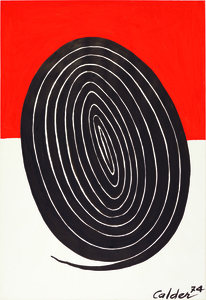
ALEXANDER CALDER - 椭圆形的螺旋 - 纸上水粉和墨水 - 43 1/4 x 29 1/2 英寸。

亚历山大·卡尔德

HARRY BERTOIA - 柳树雕塑 - 不锈钢 - 61 1/2 x 39 x 39 英寸。

哈里·贝托亚

HARRY BERTOIA - Untitled (Sounding Sculpture) - 铍铜和青铜,木质底座 - 36 1/2 x 8 x 8 英寸。

哈里·贝托亚

<div><font face=Calibri size=3 color=black>Harry Bertoia was an authentic visionary in art, and they are rare. Of those whose métier is sculpture, Alexander Calder and Harry Bertoia are the twentieth-century American standouts. They are engineers of beauty; their creative currency is feats of invention and pure artistry that honor our experience of them (if we are willing to quiet our mind) as if a sacred event. It was Duchamp who suggested Calder call his kinetic works “mobiles”, but it was up to Bertoia himself to coin a word to describe something for which there was little precedent. Visually precise, kinetic, and offering resonant, vibratory sound, a “Sonambient” sculpture is at once a metaphor for our sentient experience in the world yet capable of inducing an aura of transcendent experience. Given that insight, it is easy to understand Bertoia’s view that “I don’t hold onto terms like music and sculpture anymore. Those old distinctions have lost all their meaning.”</font></div><br><br><div> </div><br><br><div><font face=Calibri size=3 color=black>The present “Sonambient” sculpture is a forty-eight-inch-tall curtain of thin-gauged tines. Once activated, it becomes a 15 3/4 inch long, 8 inches deep wall of sound. Five rows of narrow tines are staggered in number, alternating between 30 and 29 tines that, when activated, present as an undulating wall of sound. When touched or moved by air currents, the rods produce a sound that, while metallic, does not betray its source of inspiration: the serene connection Bertoia felt in observing the gentle undulating movement of desert grasses. As always, this is a Bertoia sculpture that invites participation in the experience of changing shapes and sounds, a participatory work that asks us to be present in the moment, to connect across time with the object and its creator.</font></div>

哈里·贝托亚

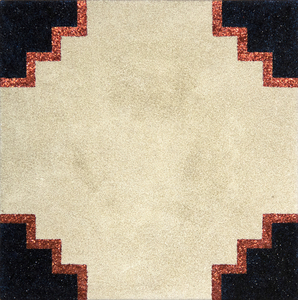
The essential and dramatic declaration “Let there be light” of Genesis is not so far removed from Mary Corse’s recollection of the moment in 1968 when the late afternoon sun electrified the reflective road markings of Malibu as she drove east. In an instant, the glowing asphalt markings provided the oracle she needed to realize she could ‘put light in the painting and not just make a picture of light’.  Using the same glass microbeads utilized by road maintenance services, she layers and embeds the prismatic material in bands and geometric configurations creating nuanced glimmering abstract fields which shift as the viewer moves in relationship to the work. Move to one side and dimness brightens to light. Walk back and forth and you might feel a rippling effect from its shimmering, prismatic effects.<br><br>A photographic image of a Mary Corse microsphere painting is not only a dull representation, but it also misses the point – it is experience dependent art that requires participation to ‘be’.  Of course, “Untitled” (1975) defies that one-point static perspective and instead, depends upon a real time, interactive art experience which heightens awareness of the body in space as the viewer experiences shifts of retinal stimulation, sensation and feeling. It is a rare bird.  Unusually petite at two-foot square, its design, geometry and color belie her earlier revelation that led to a devotion to her usual reductive palette. Instead, it is a bold statement in sequined color, its center field bounded at the corners by a sparkling red stepped motif that separates it from its starry night sky corner spandrels. It may not include a star motif, but it has the glamour and presence that belongs along Hollywood’s Walk of Fame.

玛丽·科罗斯

<div>Andy Warhol’s <em>Mao</em> (1972) is one of the artist’s most iconic and provocative screenprints, reflecting his fascination with the intersection of political power and celebrity culture. This impression, numbered 244/250, comes from the regular edition of 250, in addition to 50 artist’s proofs. Warhol based the image on the widely circulated official portrait of Chairman Mao Zedong, a figure whose likeness was omnipresent in China during the Cultural Revolution. By reimagining the image through his vivid Pop palette, Warhol transformed a symbol of political authority into a mass-produced cultural icon. </div><br><br><div> </div><br><br><div>In this version, Mao’s face is rendered in a striking deep blue, offset by a green shirt and set against a turquoise background. The bold chromatic choices infuse the portrait with both drama and irony, destabilizing the original propagandistic authority of the image. Warhol further heightens this tension by juxtaposing flat, mechanical silkscreen layers with painterly flourishes, blurring the line between mass production and individual expression. </div><br><br><div> </div><br><br><div>The <em>Mao </em>series marked a new chapter in Warhol’s career in the 1970s, shifting from Hollywood stars to figures of global influence. Today, these works are regarded as essential statements on the nature of power, fame, and the pervasive reach of the image in contemporary culture. </div>

安迪·沃霍尔

从 20 世纪 50 年代末到 60 年代中期,雷-帕克早期对色域绘画的贡献以其鲜活、清新的特质脱颖而出。帕克在用石膏粉预处理过的大画布上,用生猛的笔触排列出两个或更多粗犷的色块。这些色块的色彩饱和而微妙,展现出一种独特的活力。虽然帕克的构图可能会让人联想到罗斯科的作品,但坚实有力的色彩表现方式却使其与众不同。帕克的作品保持了纽约画派的宏大规模和活力,但又与抽象表现主义不同,他摒弃了抽象表现主义常有的强烈情感,接受了抽象表现主义运动的愿景,没有典型的悲怆。

雷-帕克

罗素·扬

This well preserved bell is one of the largest known bronzes from the Southeast Asian Bronze Age, generally named after the Dongson site in North Vietnam.  The swirling band design is finely and crisply cast. Dongson bronze drums were also reported in South China, Thailand, Laos, West Malaysia, and Indonesia and as Far East as Western Iranian Java. <br><br>The Dong Son culture is a Bronze age culture including all of southeast Asia and into the Indo-Malaya Archipelago from about 1000 to 1 BC. Centered on the Red River Valley of Vietnam, the Dong Son were sophisticated agriculturalists, raising rice and buffalo. Dong Son probably arose from local Neolithic cultures, such as Phung Nguyen and Dong Dau phases. Dong Son is identified with the Van Lang ruling dynasty, the first ruling dynasty of Vietnam. By the second century BC, impacts from the Han Dynasty in China were being felt and according to historic records, the Dong Son were absorbed into the Han Dynasty territory.

东南亚

<div><font face=Lato size=3 color=black>Wayne Thiebaud’s <em>Breakfast</em>, from an edition of 50, demonstrates the artist’s signature blend of Pop-inflected realism and painterly intimacy. Executed in colored drypoint, the work captures the simple subject of a morning meal with a remarkable freshness: hatching lines soften and blur the composition, creating a pastel-like effect that distinguishes it from the crispness of commercial print design. Though slightly faded, the impression retains the playful chromatic sensibility and softly modeled shadowing that became hallmarks of Thiebaud’s style.</font></div><br><br><div><font face=Lato size=3> </font></div><br><br><div><font face=Lato size=3 color=black>Since the early 1960s, Thiebaud has been celebrated for his depictions of food—cakes, pies, gumball machines, and diner counters—rendered not as literal meals but as cultural icons, at once nostalgic and idealized. In <em>Breakfast</em>, the modest meal is transformed into a subject of contemplation and delight, celebrating the pleasures of everyday American life while evoking memory and desire. The combination of precision and informality speaks to Thiebaud’s ability to merge the immediacy of drawing with the enduring resonance of painting.</font></div><br><br><div><font face=Lato size=3> </font></div><br><br><div><font face=Lato size=3 color=black>Institutional recognition of the work’s importance is reflected in its inclusion within the National Gallery of Art, Washington, affirming its role within Thiebaud’s larger project of elevating common objects into images of enduring cultural significance.</font></div>

韦恩·蒂博

罗素·杨 - 米克·贾格尔(《同情魔鬼》) - 丙烯、油性墨水、丝网印刷,亚麻布上镶嵌钻石粉 - 62 x 48 英寸

罗素·扬

ELLSWORTH KELLY - 《无题》(选自 "8 by Eight "作品集,以庆祝 "临时当代") - 拱形纸石版画 - 28 3/4 x 40 3/4 英寸。

埃尔斯沃思·凯利

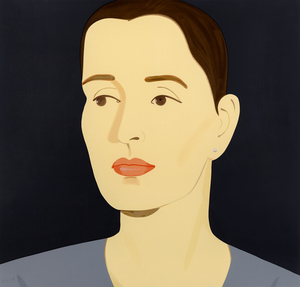
ALEX KATZ - Vivien - 博物馆木板上的丝网印刷 - 39 x 41 英寸。

亚历克斯·卡茨

罗素·杨 - 披头士狂热 - 亚克力、油性墨水与钻石粉丝网印刷于亚麻布 - 36 x 60 英寸

罗素·扬

ELLSWORTH KELLY - Red Curve - 彩色石版画 - 10 x 7 1/2 英寸。

埃尔斯沃思·凯利

罗素·杨 - 伊丽莎白·泰勒肖像 - 亚麻布丝网印刷 - 62 x 48 英寸

罗素·扬

罗素·杨 - 科特·柯本 - 亚克力颜料、珐琅与钻石粉丝网印刷于亚麻布 - 62 x 48 英寸

罗素·扬

罗素·杨 - 布兰多自行车 - 亚麻布丝网印刷 - 62 x 48 英寸

罗素·扬

ELLSWORTH KELLY - Red Curve (Black State) - 彩色石版画 - 10 x 7 1/2 英寸。

埃尔斯沃思·凯利

JOSEF ALBERS - 配方:铰接 - 丝网印刷 - 左侧:10 x 17 1/2 in. 右侧:6 x 10 1/2 in.

约塞夫·阿尔伯斯

JOSEF ALBERS - 配方:关节 - 丝网印刷 - 12 x 11 3/4 in. ea.

约塞夫·阿尔伯斯

LAWRENCE SCHILLER - 《结束的一天》,玛丽莲-梦露,"必须要付出的东西" - 银胶版画 - 20 x 24 英寸。

拉森·席勒

顾问

安德烈-WEB-POST

ANDREA RICO DAHLIN

高级副总裁
怀俄明州杰克逊霍尔

Andrea 拥有纽约宾汉姆顿大学艺术史学士学位,辅修美术,并在纽约佳士得教育集团获得现代艺术、鉴赏和艺术市场史硕士学位。她曾在堪萨斯城奈尔森-阿特金斯艺术博物馆(Nelson-Atkins Museum of Art)和纽约佳士得拍卖行工作,积累了丰富的博物馆和拍卖行工作经验。

自2015年加入希瑟-詹姆斯美术公司以来,安德烈亚已经获得了寄售,并帮助重要艺术家建立了引人注目的私人和博物馆收藏,其中包括克劳德-莫奈、阿尔弗雷德-西斯利、亨利-马蒂斯、埃德加-德加、诺曼-洛克威尔、安德鲁-怀斯、伊莱恩-德库宁、安迪-沃霍尔和汤姆-韦塞尔曼。

莎拉 2025

萨拉-菲舍尔

高级副主席 Heather James 和艺术顾问联合主席
怀俄明州杰克逊霍尔

莎拉从小在艺术的熏陶下长大,对艺术和历史都有着深厚的感情。十多年来,她凭借对艺术的热爱,在画廊、拍卖行和博物馆中游刃有余。

莎拉坚信学习和体验业务的方方面面,她在艺术界担任过各种职务,为咨询和工作带来了全面的方法。自 2015 年以来,莎拉一直是 Heather James Fine Art 的关键人物,她为客户提供顶级服务,管理杰克逊霍尔画廊,策划画廊展览和收藏家之家,并带头开展战略推广活动。

莎拉在纽约大学获得了新闻学和艺术史学位,之后又在伦敦佳士得艺术、法律和商业项目中获得了硕士学位,为她的学术生涯打下了坚实的基础。除了在专业和教育方面的追求,萨拉还积极参与自己身边的事业,包括美国大屠杀纪念博物馆,以及杰克逊霍尔公共艺术和泰顿适应性的董事会成员。

作为联席主席,Sarah 将她在艺术和收藏方面的个人经验和知识融入到每一次互动中,始终为客户的需求寻求最佳解决方案。

在新闻中

服务

希瑟詹姆斯美术提供广泛的基于客户的服务,满足您的特定艺术收藏需求。我们的运营团队包括专业的艺术处理人员、完整的注册部门和物流团队,在艺术运输、安装和收藏管理方面拥有丰富的经验。凭借白手套服务和个性化护理,我们的团队竭尽全力确保为客户提供卓越的艺术服务。

了解我们

特色艺术

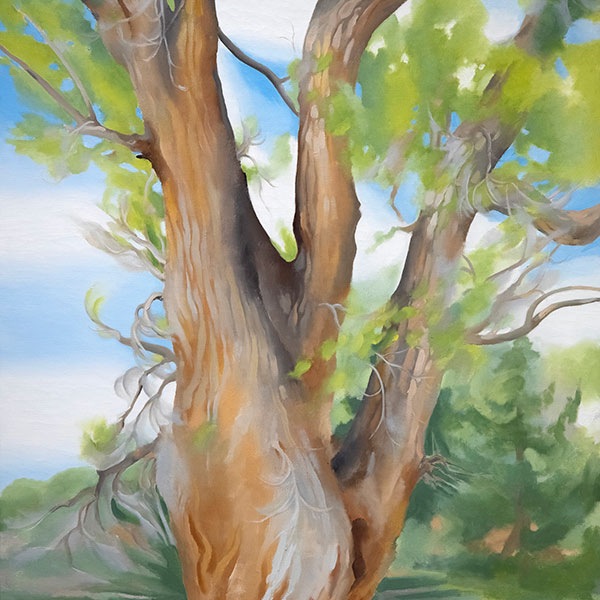
Cottonwood Tree (Near Abiquiu), New Mexico (1943) by celebrated American artist Georgia O’Keeffe is exemplary of the airier, more naturalistic style that the desert inspired in her. O’Keeffe had great affinity for the distinctive beauty of the Southwest, and made her home there among the spindly trees, dramatic vistas, and bleached animal skulls that she so frequently painted. O’Keeffe took up residence at Ghost Ranch, a dude ranch twelve miles outside of the village of Abiquiú in northern New Mexico and painted this cottonwood tree around there. The softer style befitting this subject is a departure from her bold architectural landscapes and jewel-toned flowers.<br><br>The cottonwood tree is abstracted into soft patches of verdant greens through which more delineated branches are seen, spiraling in space against pockets of blue sky. The modeling of the trunk and delicate energy in the leaves carry forward past experimentations with the regional trees of the Northeast that had captivated O’Keeffe years earlier: maples, chestnuts, cedars, and poplars, among others. Two dramatic canvases from 1924, Autumn Trees, The Maple and The Chestnut Grey, are early instances of lyrical and resolute centrality, respectively. As seen in these early tree paintings, O’Keeffe exaggerated the sensibility of her subject with color and form.<br><br>In her 1974 book, O’Keeffe explained: “The meaning of a word— to me— is not as exact as the meaning of a color. Color and shapes make a more definite statement than words.” Her exacting, expressive color intrigued. The Precisionist painter Charles Demuth described how, in O’Keeffe’s work, “each color almost regains the fun it must have felt within itself on forming the first rainbow” (As quoted in C. Eldridge, Georgia O’Keeffe, New York, 1991, p. 33). As well, congruities between forms knit together her oeuvre. Subjects like hills and petals undulate alike, while antlers, trees, and tributaries correspond in their branching morphology.<br><br>The sinewy contours and gradated hues characteristic of O’Keeffe find an incredible range across decades of her tree paintings. In New Mexico, O’Keeffe returned to the cottonwood motif many times, and the seasonality of this desert tree inspired many forms. The vernal thrill of new growth was channeled into spiraling compositions like Spring Tree No.1 (1945). Then, cottonwood trees turned a vivid autumnal yellow provided a breathtaking compliment to the blue backdrop of Mount Pedernal. The ossified curves of Dead Cottonweed Tree (1943) contain dramatic pools of light and dark, providing a foil to the warm, breathing quality of this painting, Cottonwood Tree (Near Abiquiu). The aural quality of this feathered cottonwood compels a feeling guided by O’Keeffe’s use of form of color.

GEORGIA O'KEEFFE

胡安·米罗 - 女神头像 - 青铜,黑色铜绿 - 66 x 36 1/2 x 30 英寸

琼·米罗

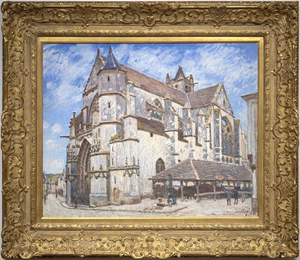
Between Île-de-France and Burgundy and on the edge of the Fontainebleau Forest lies the medieval village of Moret-sur-Loing, established in the 12th century. When Alfred Sisley described its character to Monet in a letter dated 31 August 1881 as “a chocolate-box landscape…” he meant it as a memento of enticement; that its keep, the ramparts, the church, the fortified gates, and the ornate facades nestled along the river were, for a painter, a setting of unmatched charm. An ancient church, always the most striking townscape feature along the Seine Valley, would be a presence in Sisley’s townscape views as it was for Corot, and for Monet at Vétheuil. But unlike Monet whose thirty views of Rouen Cathedral were executed so he could trace the play of light and shadow across the cathedral façade and capture the ephemeral nature of moment-to-moment changes of light and atmosphere, Sisley set out to affirm the permanent nature of the church of Notre-Dame at Moret-sur-Loing.  Monet’s sole concern was air and light, and Sisley’s appears to be an homage keepsake. The painting exudes respect for the original architects and builders of a structure so impregnable and resolute, it stood then as it did in those medieval times, and which for us, stands today, as it will, for time immemorial.<br><br>Nevertheless, Sisley strived to show the changing appearance of the motif through a series of atmospheric changes. He gave the works titles such as “In Sunshine”, “Under Frost”, and “In Rain” and exhibited them as a group at the Salon du Champ-de-Mars in 1894, factors that suggest he thought of them as serial interpretations. Nevertheless, unlike Monet’s work, l’église de Moret, le Soir reveals that Sisley chose to display the motif within a spatial context that accentuates its compositional attributes — the plunging perspective of the narrow street at left, the strong diagonal recession of the building lines as a counterbalance to the right, and the imposing weight of the stony building above the line of sight.

阿尔弗雷德·西斯利

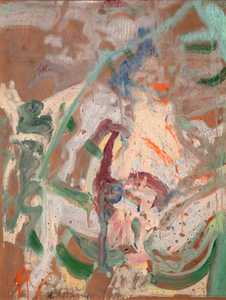
威廉-德-库宁--《划船的女人》--纸上油画,铺在石膏板上--47 1/2 x 36 1/4英寸。

威廉·德库宁

19世纪70年代初,温斯洛-霍默经常在位于纽约州哈德逊河和卡茨基尔山之间的一个小农庄附近绘制乡村生活场景,该小农庄因其出色的麦田而世代闻名。今天,赫尔利因激发了荷马最伟大的作品之一--1872年夏天绘制的《鞭子的Snap》而更为著名。在其他许多受该地区启发的画作中,《站在麦田里的女孩》感情丰富,但没有过度感伤。它与1866年在法国画的一幅题为《在麦田里》的研究报告以及次年他回到美国后画的另一幅报告直接相关。但荷马无疑会对这幅作品感到最自豪。这是一幅肖像画,一幅服装研究画,一幅具有欧洲田园画伟大传统的风俗画,也是一幅戏剧性的逆光、大气的巡回画,浸透在迅速消逝的阴暗时刻的光线中,并带有羊脂玉般的花香和麦穗的点缀。1874年,荷马送了四幅画给国家设计学院的展览。其中一幅名为 "女孩"。难道不是这一幅吗?

温斯洛荷马

<div>When forty rural Sacramento Delta landscapes by Wayne Thiebaud were unveiled at a San Francisco gallery opening in November 1997, attendees were amazed by paintings they never anticipated. This new frontier betrayed neither Thiebaud’s mastery of confectionary-shop colors nor his impeccable eye for formal relationships. Rather, his admirers were shocked to learn that all but seven of these forty interpretations had been completed in just two years. As his son Paul recalled, “the refinements of my father’s artistic process were ever changing in a chameleon-like frenzy.” The new direction had proved an exhilarating experience, each painting an affirmation of Wayne Thiebaud’s impassioned response to the fields and levees of the local environment he dearly loved.   </div><br><br><div> </div><br><br><div>Viewed from the perspective of a bird or a plane, "The Riverhouse" is an agrarian tapestry conceived with a kaleidoscopic range of shapes and simple forms; fields striped with furrows or striated fans, deliriously colored parallelograms and trapezoids, an orchard garnished pizza-shaped wedge, and a boldly limned river, the lifeline of a thirsty California central valley largely dependent upon transported water. "The Riverhouse" is a painting that ‘moves’ between seamlessly shifting planes of aerial mapping that recalls Richard Diebenkorn’s stroke of insight when he took his first commercial flight the spring of 1951, and those partitions engaging a more standard vanishing point perspective. Thiebaud explained his process as “orchestrating with as much variety and tempo as I can.” Brightly lit with a fauve-like intensity, "The Riverhouse" is a heady concoction of vibrant pigment and rich impasto, one that recalls his indebtedness to Pierre Bonnard whose color Thiebaud referred to as “a bucket full of hot coals and ice cubes.” Among his many other influences, the insertion of objects — often tiny — that defy a rational sense of scale that reflects his interest in Chinese landscape painting.  As always, his mastery as a painter recalls his titular pies and cakes with their bewitching rainbow-like halos and side-by-side colors of equal intensity but differing in hues to create the vibratory effect of an aura, what Thiebaud explained “denotes an attempt to develop as much energy and light and visual power as you can.” </div><br><br><div> </div><br><br><div>Thiebaud’s Sacramento Delta landscapes are an integral and important part of his oeuvre. Paintings such as "The Riverhouse" rival the best abstract art of the twentieth century. His good friend, Willem de Kooning thought so, too.</div>

韦恩·蒂博

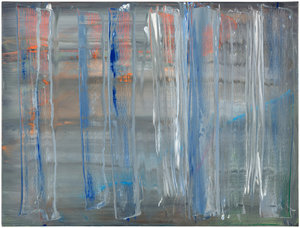
<div><font face=Lato size=3>Widely recognized as one of the most consequential artists of our time, Gerhard Richters career now rivals that of Picasso's in terms of productivity and genius. The multi-faceted subject matter, ranging from slightly out-of-focus photographic oil paintings to Kelly-esque grid paintings to his "squeegee" works, Richter never settles for repeating the same thought- but is constantly evolving his vision. Richter has been honored by significant retrospective exhibitions, including the pivotal 2002 show,  "Gerhard Richter: Forty Years of Painting," at the Museum of Modern Art, New York.    "Abstraktes Bild 758-2" (1992) comes from a purely abstract period in Richter's work- where the message is conveyed using a truly physical painting style, where applied paint layers are distorted with a wooden "Squeegee" tool. Essentially, Richter is sculpting the layers of paint, revealing the underlayers and their unique color combinations; there is a degree of "art by chance". If the painting does not work, Richter will move on- a method pioneered by Jackson Pollock decades earlier.    Richter is included in prominent museums and collections worldwide, including the Tate, London, The Museum of Modern Art, New York, and the San Francisco Museum of Modern Art, among many others.</font></div>

格哈德·里希特

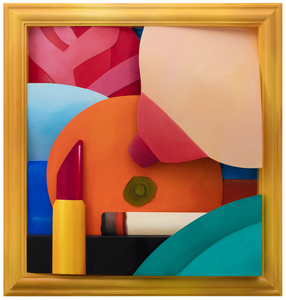
Tom Wesselmann was a leader of the Pop Art movement. He is best remembered for large-scale works, including his Great American Nude series, in which Wesselmann combined sensual imagery with everyday objects depicted in bold and vibrant colors. As he developed in his practice, Wesselmann grew beyond the traditional canvas format and began creating shaped canvases and aluminum cut-outs that often functioned as sculptural drawings. Continuing his interest in playing with scale, Wesselmann began focusing more closely on the body parts that make up his nudes. He created his Mouth series and his Bedroom series in which particular elements, rather than the entire sitter, become the focus.<br> <br>Bedroom Breast (2004) combines these techniques, using vivid hues painted on cut-out aluminum. The work was a special commission for a private collector's residence, and the idea of a bedroom breast piece in oil on 3-D cut-out aluminum was one Wesselmann had been working with for many years prior to this work's creation. The current owner of the piece believed in Wesselmann's vision and loved the idea of bringing the subject to his home.<br><br>It's one of, if not the last, piece Wesselmann completed before he passed away. The present work is the only piece of its kind - there has never been an oil on aluminum in 3D at this scale or of this iconography.  

托姆·韦塞尔曼

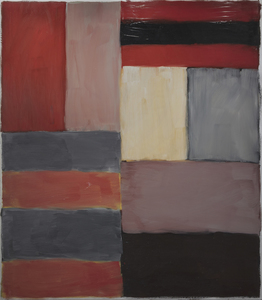
The frame of reference for Irish American Sean Scully’s signature blocks and stripes is vast. From Malevich’s central premise that geometry can provide the means for universal understanding to Rothko’s impassioned approach to color and rendering of the dramatic sublime, Scully learned how to condense the splendor of the natural world into simple modes of color, light, and composition. Born in Dublin in 1945 and London-raised, Scully was well-schooled in figurative drawing when he decided to catch the spirit of his lodestar, Henri Matisse, by visiting Morocco in 1969. He was captivated by the dazzling tessellated mosaics and richly dyed fabrics and began to paint grids and stipes of color. Subsequent adventures provided further inspiration as the play of intense light on the reflective surfaces of Mayan ruins and the ancient slabs of stone at Stonehenge brought the sensation of light, space, and geometric movement to Scully’s paintings. The ability to trace the impact of Scully’s travels throughout his paintings reaffirms the value of abstract art as a touchstone for real-life experience.<br><br><br>Painted in rich, deep hues and layered, nuanced surfaces, Grey Red is both poetic and full of muscular formalism. Scully appropriately refers to these elemental forms as ‘bricks,’ suggesting the formal calculations of an architect. As he explained, “these relationships that I see in the street doorways, in windows between buildings, and in the traces of structures that were once full of life, I take for my work. I use these colors and forms and put them together in a way that perhaps reminds you of something, though you’re not sure of that” (David Carrier, Sean Scully, 2004, pg. 98). His approach is organic, less formulaic; intuitive painter’s choices are layering one color upon another so that contrasting hues and colors vibrate with subliminal energy. Diebenkorn comes to mind in his pursuit of radiant light. But here, the radiant bands of terracotta red, gray, taupe, and black of Grey Red resonate with deep, smoldering energy and evoke far more affecting passion than you would think it could impart. As his good friend, Bono wrote, “Sean approaches the canvas like a kickboxer, a plasterer, a builder. The quality of painting screams of a life being lived.”

塞恩·斯卡利

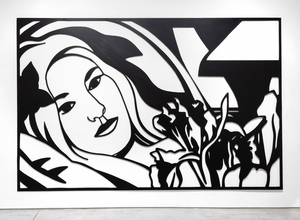
Tom Wesselmann will undoubtedly be remembered for associating his erotic themes with the colors of the American flag. But Wesselmann had considerable gifts as a draftsman, and the line was his principal preoccupation, first as a cartoonist and later as an ardent admirer of Matisse. That he also pioneered a method of turning drawings into laser-cut steel wall reliefs proved a revelation. He began to focus ever more on drawing for the sake of drawing, enchanted that the new medium could be lifted and held: “It really is like being able to pick up a delicate line drawing from the paper.”<br><br>The Steel Drawings caused both excitement and confusion in the art world. After acquiring one of the ground-breaking works in 1985, the Whitney Museum of American Art wrote Wesselmann wondering if it should be cataloged as a drawing or a sculpture. The work had caused such a stir that when Eric Fischl visited Wesselmann at his studio and saw steel-cut works for the first time, he remembered feeling jealous. He wanted to try it but dared not. It was clear: ‘Tom owned the technique completely.’<br><br>Wesselmann owed much of that technique to his year-long collaboration with metalwork fabricator Alfred Lippincott. Together, in 1984 they honed a method for cutting the steel with a laser that provided the precision he needed to show the spontaneity of his sketches. Wesselmann called it ‘the best year of my life’, elated at the results that he never fully achieved with aluminum that required each shape be hand-cut.  “I anticipated how exciting it would be for me to get a drawing back in steel. I could hold it in my hands. I could pick it up by the lines…it was so exciting…a kind of near ecstasy, anyway, but there’s really been something about the new work that grabbed me.”<br><br>Bedroom Brunette with Irises is a Steel Drawing masterwork that despite its uber-generous scale, utilizes tight cropping to provide an unimposing intimacy while maintaining a free and spontaneous quality. The figure’s outstretched arms and limbs and body intertwine with the petals and the interior elements providing a flowing investigative foray of black lines and white ‘drop out’ shapes provided by the wall. It recalls Matisse and any number of his reclining odalisque paintings. Wesselmann often tested monochromatic values to discover the extent to which color would transform his hybrid objects into newly developed Steel Drawing works and, in this case, continued with a color steel-cut version of the composition Bedroom Blonde with Irises (1987) and later still, in 1993 with a large-scale drawing in charcoal and pastel on paper.

托姆·韦塞尔曼

<div><font face=Lato size=3 color=black>Irving Norman conceived and created <em>The Human Condition</em> at a time when he must have reflected deeply on the totality of his life. Given its grand scale and cinematic treatment, it impresses as a profound culmination of his artistic journey, synthesizing decades of themes, insights, and experiences into a single monumental work. A man of great humility and an artist of uncommon skill, he translated a horrendous war experience into impactful allegories of unforgettable, often visceral imagery. He worked in solitude with relentless forbearance in a veritable vacuum without fame or financial security. Looking to the past, acutely aware of present trends, he knew, given the human predicament, he was forecasting the future. As one New York Times reviewer mused in 2008, "In light of current circumstances, Mr. Norman's dystopian vision may strike some…as eerily pertinent," an observation that recalled recent events.<br><br></font></div><br><br><div><font face=Lato size=3 color=black>Irving Norman's figures, manipulated by their environment and physical space, are of a style that exaggerates the malleability of the human form to underscore their vulnerability and subjugation. This literal and symbolic elasticity suggests that these figures are stretched, compressed, or twisted by the forces of their environment, emphasizing their lack of autonomy and the oppressive systems that govern their existence. While these figures reflect vulnerability, Norman's structural choice in <em>The Human Condition</em> creates a stark juxtaposition that shifts attention toward the central tableau. A commanding female figure, rising above the calamitous failures and atrocities of the past, is joined by a man, forming a symbolic "couple,” suggesting the unity and shared responsibility of a new vision. Their hands, magnified and upturned, present these children as a vision offering hope and renewal for the future. The gesture, combined with the futuristic clothing of the diminutive figures, reinforces the idea of an alternative path—a brighter, forward-looking humanity. The central tableau acts as a metaphorical offering, inviting the viewer to consider a future untouched by the weight of darkness from which these figures emerge.<br><br></font></div><br><br><div><font face=Lato size=3 color=black>Here, Norman underscores a hopeful, if not optimistic, vision for generations ahead. The structural decision suggests a deliberate shift in focus: the darker scenes relegated to the sides represent the burdens, past and present. At the same time, the central figures embody the potential for a future shaped by resilience and renewal. This juxtaposition distinguishes <em>The Human Condition</em> as a reflection of Norman's later years, where a tempered hope emerges to claim the high ground over the war-mongering, abject corruption, frantic pleasure-seeking, and the dehumanizing effects of modern society.<br><br></font></div><br><br><div><font face=Lato size=3 color=black>Throughout his long career, Norman stood tall in his convictions; he turned, faced the large, empty canvases, and designed and painted complex, densely populated scenes. As for recognition, he rationalized the situation—fame or fortune risked the unsullied nature of an artist's quest. Ultimately, <em>The Human Condition</em> is a summation of Norman's life and work and a call to action, urging us to examine our complicity in the systems he so vividly depicted. Through meticulous craftsmanship and allegorical intensity, it is a museum-worthy masterwork that continues to resonate, its themes as pertinent today as they were when Norman painstakingly brought his vision to life.</font></div>

欧文·诺曼

联系

联系我们